Dental Implants Calabasas CA for a Stronger Bite
A strong bite is easy to take for granted until a missing tooth changes the way you eat, speak, or smile. One gap in the back of the mouth can make steak feel like work. A missing front tooth can turn a relaxed conversation into a self-conscious one. Over time, the effects run deeper than appearance. Teeth shift. The jawbone begins to shrink where the root used to be. Chewing forces get redirected, often unevenly, and that can aggravate wear on nearby teeth.
That is why dental implants have become such an important treatment option for adults who want more than a temporary fix. When done thoughtfully, an implant does not just fill a space. It restores structure, function, and stability in a way that a removable appliance usually cannot. For patients looking into Dental Implants Calabasas CA, the real value is not just a natural-looking tooth. It is the chance to bite with confidence again.
What makes an implant different from other tooth replacement options
A dental implant is a small post, usually made from titanium or a similarly biocompatible material, placed into the jawbone where the root of a missing tooth used to be. After healing, that post supports a crown, bridge, or denture attachment. The key distinction is that the implant replaces the root as well as the visible part of the tooth.
That root replacement matters. A traditional bridge can close a gap effectively, but it often relies on neighboring teeth for support. A removable partial denture can restore some function, but it can also move, trap food, and place pressure on gum tissue. An implant stands independently in many cases, which helps preserve adjacent natural teeth and stimulates the bone through normal chewing forces.
Patients usually understand the cosmetic appeal right away. What often surprises them is how much the mechanical side of chewing changes after treatment. When a crown on an implant is designed well and the bite is adjusted precisely, patients often report that they stop thinking about the missing tooth altogether. That is a meaningful benchmark in dentistry. The best restoration is often the one that disappears into daily life.
Why bite strength deserves more attention
Bite strength is not simply about force. It is about control, balance, and comfort. A healthy bite lets you chew efficiently on both sides of the mouth without overloading certain teeth or joints. When one tooth is missing, people rarely stop chewing entirely, but they adapt. They favor one side. They cut food differently. They avoid nuts, crusty bread, or firmer meats. Those small adjustments become habits.
Over months and years, those habits can create problems. The teeth that take extra load may crack or wear down faster. Muscles on one side may become sore. Some patients clench more because their bite feels unstable. Others lose confidence in social settings because they worry that a removable appliance will shift while speaking or laughing.
An implant can help restore a more even distribution of chewing forces. It is not exactly the same as the natural tooth it replaces, because natural teeth have a periodontal ligament and implants do not. That ligament gives natural teeth a subtle shock-absorbing quality and sensory feedback. Still, a properly integrated implant can provide excellent support for biting and chewing, especially when planned with attention to spacing, angulation, and the condition of the surrounding bone.
The bone issue most people do not see
When a tooth is removed and not replaced, the jawbone in that area typically begins to resorb. In simple terms, the body trims away bone it no longer needs. This is one reason a long-standing missing tooth can be harder to restore later than a recently lost tooth.
The shrinking can happen in width, height, or both. In the upper back jaw, the sinus can also expand downward over time, reducing available bone for implant placement. In the lower jaw, the bone can narrow significantly. These changes are not always visible in the mirror, but they show up clearly on imaging and can affect whether an implant can be placed immediately, later, or only after grafting.
This is one reason early evaluation matters. It does not mean every patient needs treatment right away, but it helps to know what the anatomy looks like before options become more limited. In practices that provide Dental Implants Calabasas CA, three-dimensional imaging is commonly used to assess bone volume, nerve position, sinus anatomy, and the relationship of nearby teeth. Good planning at this stage reduces surprises later.
Who tends to be a good implant candidate
Implants work well for many adults, but candidacy is more nuanced than advertisements sometimes suggest. The strongest candidates usually have healthy gums, adequate bone, and a commitment to oral hygiene. Smokers can receive implants, but smoking raises the risk of healing complications and long-term implant problems. Diabetes is not an automatic disqualifier, though blood sugar control matters. Teeth grinding is manageable in many cases, but it requires careful bite design and often a night guard.
Age alone is rarely the deciding factor. I have seen very healthy older adults do beautifully with implants because they followed instructions, kept clean mouths, and returned for maintenance. I have also seen younger patients struggle because they assumed an implant was maintenance-free. It is not. An implant cannot decay, but the tissues around it can become inflamed and the supporting bone can be lost if plaque control is poor.
A careful exam usually looks at several factors at once:
- gum health and the presence of active periodontal disease
- bone quantity and density at the missing tooth site
- bite forces, including clenching or grinding habits
- medical history, medications, and smoking status
- the patient’s goals, budget, and willingness to maintain the result
That kind of screening is not a formality. It is where realistic treatment decisions begin.
Single tooth, multiple teeth, or a full arch
Not every implant case looks the same, and the treatment plan should reflect the actual problem rather than forcing everyone into one model.
For a single missing tooth, an implant crown is often the most conservative fixed option because it may avoid preparing adjacent healthy teeth. This is especially valuable if the neighboring teeth are intact and free of large fillings or crowns.
For several missing teeth in a row, two or more implants may support a bridge. That can be a strong solution when enough bone is available and the bite forces are favorable. It also reduces the bulk and movement associated with many removable partial dentures.
For patients missing all teeth in one arch, implants can support either a snap-in overdenture or a fixed full-arch prosthesis. These are very different experiences. An overdenture can be removed for cleaning and often costs less. A fixed option generally feels more like permanent teeth but demands more from planning, surgery, and home care.
The best choice depends on anatomy, expectations, and finances. There is no universal winner. A removable implant-supported denture can dramatically improve comfort and chewing compared with a conventional denture. For some patients, that is life-changing and entirely appropriate. Others want a fixed solution and are good candidates for it. Good dentistry respects both paths.
The planning stage is where many outcomes are won or lost
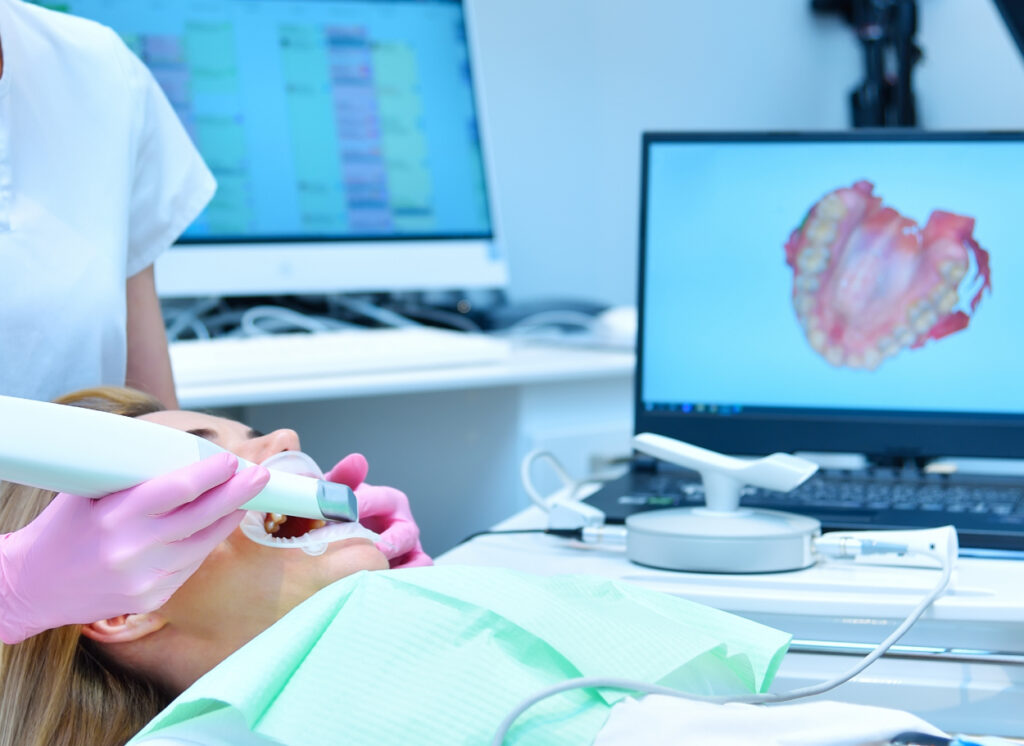
Patients often focus on the day of surgery, but the less visible planning stage is where much of the quality is determined. Proper records usually include a clinical exam, digital radiographs, photographs, and often a cone beam CT scan. Impressions or digital scans help evaluate spacing and prosthetic design. In straightforward cases, this process moves quickly. In more complex cases, several design decisions have to be resolved before anyone picks up a surgical handpiece.
Position is everything. An implant that is technically integrated into bone but placed in a poor location can create problems with the final crown shape, gum appearance, cleansability, and bite. This is why experienced clinicians plan from the final tooth backward. The visible result and functional bite drive the implant position, not the other way around.
This point matters even more in the front of the mouth. A patient may come in asking to replace a single upper front tooth and assume it is simpler than a back molar. From a cosmetic standpoint, the opposite is often true. Tiny differences in gum contour, crown length, and implant angulation can be obvious in the smile zone. In those cases, patience, precise planning, and good communication make a tremendous difference.
What treatment actually feels like
Implant placement is often easier on patients than they expect. In a routine case with local anesthesia, the procedure can feel less dramatic than a tooth extraction. There is pressure and vibration, but not sharp pain when anesthesia is profound. Some patients choose oral sedation or IV sedation if they are anxious or if the surgery is more involved.
After placement, soreness typically peaks in the first few days and then improves. Many people manage well with a combination of prescribed or recommended pain medication, cold compresses, and a softer diet for a short period. Swelling varies. A simple implant in a healed site may produce modest discomfort. A case that includes extraction, grafting, or sinus work can feel more substantial.
Healing requires time because the implant must integrate with bone. Depending on the case, that may take a few months. Some patients qualify for immediate provisional teeth, while others need a staged approach before the final crown is attached. Immediate treatment can be excellent in the right circumstances, but it is not always the wisest route. Dental Implants Calabasas CA If the bone quality is poor, the bite is heavy, or infection is present, slowing down can produce a stronger long-term result.
When bone grafting enters the picture
Bone grafting worries some patients because it sounds like a major add-on. Sometimes it is minor and routine. If a tooth has been missing for a while or the socket loses volume after extraction, grafting may be recommended to rebuild the ridge. In the upper back jaw, a sinus augmentation may be needed if the sinus floor sits too low for a stable implant.
The need for grafting does not mean the case is a bad one. It simply reflects biology. Teeth are lost for many reasons, including fracture, decay, gum disease, and trauma. Each pathway leaves a different bony foundation behind. A clinician who explains grafting clearly is not upselling by default. They may be trying to create enough support to place the implant in a position that will function and look right.
That said, not every reduced ridge should be grafted aggressively. Treatment must balance benefit, healing time, cost, and patient preference. A very small tooth in a low-visibility area may tolerate certain compromises better than a front tooth in a high smile line. Judgment matters.
How long implants last, and what threatens them
Patients often ask for a simple lifespan number. Dentistry rarely works that cleanly. Many implants function well for well over a decade, and some last much longer. But longevity depends on placement quality, restorative design, bone support, hygiene, smoking, grinding, and regular maintenance.
Common threats include peri-implant inflammation from plaque accumulation, overload from an unstable or poorly balanced bite, and mechanical issues such as loosening or wear of components. Implant crowns can chip just as crowns on natural teeth can. Screws can occasionally loosen. None of this means implants are unreliable. It means they are restorations in a living, changing mouth.
One of the more preventable causes of trouble is assuming that an implant can be cleaned casually. It cannot. Food traps, contour problems, and plaque retention matter. The home care routine should match the design of the restoration. A single implant crown is maintained differently from a full-arch fixed prosthesis. Professional cleanings and periodic radiographic checks are part of responsible ownership.
The financial side, honestly discussed
Implants are an investment, and patients deserve a clear discussion of what they are paying for. The total cost may include diagnostics, extraction if needed, grafting, implant placement, healing components, the abutment, and the final crown or prosthesis. In some offices these are bundled, and in others they are itemized. Either approach can be reasonable as long as it is transparent.
Cheaper treatment is not automatically poor treatment, and higher fees do not guarantee excellence. What matters is the quality of planning, surgical execution, restorative design, materials, and follow-up. It also matters whether the proposed treatment truly fits the patient’s needs. A single missing molar in a patient with limited budget may justify a phased approach. A more extensive rehabilitation may need coordination across surgery, periodontics, prosthodontics, or general dentistry.
Patients exploring Dental Implants Calabasas CA often compare offices based on fees, but they should also compare process. Ask what imaging is used, who performs the surgery, how the final restoration is designed, and what maintenance looks like after delivery. Those details often tell you more than a headline price.
Choosing a provider without getting overwhelmed
A polished website is easy to build. A predictable implant result takes more than marketing. Patients do best when they look for a practice that combines technical skill with plainspoken communication. You should feel that your questions are welcome, not brushed aside.
A useful consultation usually covers diagnosis, alternatives, timing, expected healing, possible complications, and cost. It should also address what happens if additional treatment is needed after imaging or once the site is opened surgically. No careful clinician promises that every case will follow a script, but they should explain how decisions are made when conditions differ from what was expected.
These questions can help during a consult:
- Am I a candidate for an implant now, or do I need grafting or other treatment first?
- Who will place the implant, and who will make the final crown or prosthesis?
- What is the expected timeline from start to finish in my case?
- What risks are most relevant for my mouth, health history, and bite?
- How will I clean and maintain this restoration long term?
Those answers often reveal whether the office is thinking beyond the procedure itself.
Daily life after the implant is restored
Once the final crown or prosthesis is in place and the bite feels right, most patients settle into normal routines quickly. That is the goal. Eating should feel easier, speech more natural, and smiling less guarded. The first few weeks often involve small bite adjustments as the patient adapts and the clinician fine-tunes contact points. Those visits are useful, not signs of failure.
The long-term routine is simple but not optional. Brush thoroughly. Clean between teeth and around the implant using the specific tools recommended for that design. Keep recall visits. If you grind at night, wear the appliance you were given. If you notice bleeding, tenderness, or a change in how the bite meets, do not wait six months to mention it.
One practical point that gets overlooked is food behavior. Implants are strong, but habits still matter. Chewing ice, opening packages with teeth, or repeatedly biting very hard objects can damage crowns, natural teeth, or both. Many restorative failures blamed on weak materials are actually habit failures.
A stronger bite is about more than force
The phrase "stronger bite" sounds muscular, but in practice it means something subtler and more valuable. It means being able to chew evenly without guarding one side. It means less strain on neighboring teeth. It means the confidence to order what you want at dinner without silently calculating which side of your mouth can handle it. It also means preserving the architecture of the jaw in a way that removable options often cannot.
For the right patient, implants offer a blend of stability, bone support, and natural function that few other treatments can match. They are not magic, and they are not maintenance-free. They require diagnosis, planning, healing, and follow-through. But when all those parts come together, the result can feel remarkably normal, which is often the highest compliment a dental restoration can earn.
If you are considering Dental Implants Calabasas CA, the best next step is a thorough evaluation tailored to your mouth, your health, and your goals. The right plan is not always the fastest one, and it is not always the most elaborate. It is the one that restores comfort, function, and confidence in a way that you can maintain for years. That is what gives a bite real strength.
Oaks Dental
5000 Parkway Calabasas, Suite 308
Calabasas, CA 91302, United States
Phone: +1 (818) 412-8349
FAQ About Dental Implants Calabasas CA
How much does a dental implant cost in California?
Costs vary with the number of teeth replaced, restoration type, imaging, and any extractions or bone grafting. Request an itemized estimate after an examination; a single advertised price may not include every treatment stage.
Can people with autoimmune disease get dental implants?
Some people may qualify, but the condition, medications, oral health, and healing risks require individual assessment. Share your medical history with your dentist, who may coordinate with your treating physician.
Can you have dental implants if you have osteopenia?
Osteopenia does not by itself establish whether implants are suitable. Your dentist must evaluate jawbone support and review bone-related medications and other risks before recommending treatment.