What Makes Dental Implants a Permanent Tooth Replacement?
When patients ask whether dental implants are truly permanent, they are usually asking two different questions at once. First, they want to know whether the implant itself can stay in place for decades. Second, they want to know whether it will feel and function like a real part of the body rather than a removable appliance that always feels slightly temporary.
That distinction matters. A bridge can restore appearance and chewing, and a denture can fill a visible gap, but neither becomes part of the jaw. Dental Implants are different because they are designed to integrate with living bone. That is the reason they are often described as a permanent tooth replacement, not simply a long-lasting prosthetic.
Still, permanence in dentistry is never magic. It depends on biology, planning, technique, and maintenance. An implant is not permanent merely because it is made of metal. It becomes durable because the body accepts it, stabilizes it, and supports it Dental Implants under everyday forces like chewing, speaking, and clenching. When those pieces line up, the result can be remarkably stable. When they do not, even the best implant system can struggle.
The real difference is in the foundation
A natural tooth is anchored by a root. When that root is lost, the body does not automatically replace it. That is the central problem with missing teeth. Most traditional tooth replacement options restore only the visible part of the tooth, not the root.
A dental implant changes that equation. The implant post, usually made from titanium or a titanium alloy, is placed into the jawbone where the root once sat. Over time, the bone heals tightly around the implant surface in a process called osseointegration. Once that bond has formed, the implant acts as an anchor for a crown, bridge, or denture.
This is why implants tend to feel more secure than removable replacements. A denture rests on gum tissue and may shift under pressure. A bridge is fixed, but it depends on neighboring teeth for support. An implant stands independently in the bone. It does not borrow support from adjacent teeth, and it does not rely on suction, adhesive, or a metal clasp.
That root-level support is what gives Dental Implants their reputation for permanence. The visible crown may need repair or replacement over many years, just as natural teeth sometimes need new fillings or crowns. The implant body itself, however, can remain in place for a very long time when conditions are favorable.
Osseointegration is the reason implants are more than prosthetics
If there is one concept that explains why implants can be permanent, it is osseointegration. This is not a loose connection or a scar-based attachment. It is a direct structural and functional bond between living bone and the implant surface.
In practical terms, the jawbone grows onto and around the implant threads, locking it into place. Once healed, a properly integrated implant does not wobble. It withstands chewing forces because those forces are transferred into the surrounding bone much like they would be with a natural root.
This healing process usually takes a few months, though the timeline varies. The upper jaw often heals more slowly than the lower jaw because its bone is usually less dense. A healthy younger patient with excellent bone may heal predictably and quickly. Someone with bone loss, a history of smoking, or uncontrolled diabetes may require a more cautious timeline.
The importance of osseointegration is hard to overstate. Without it, an implant is simply a metal fixture placed into bone. With it, the implant becomes part of the functional architecture of the mouth.
That is why implant dentistry puts so much emphasis on the period after placement. Patients sometimes focus only on the final crown because that is the visible part. Clinically, the hidden healing phase is where permanence is earned.
Material matters, but biology matters more
Most modern implants are made of titanium, and there is a good reason for that. Titanium is strong, corrosion-resistant, and highly biocompatible. The body generally tolerates it well, and bone can bond to it predictably. That combination made titanium the standard bearer in implant dentistry.
Some implants are made from zirconia, a ceramic material that appeals to certain patients because of its metal-free composition and tooth-colored appearance. Zirconia has legitimate uses, though it is less forgiving in some clinical situations and offers fewer design options than traditional titanium systems. For many cases, titanium still provides the broadest track record and the most flexibility.
Even so, the implant material alone does not create permanence. A beautifully manufactured implant placed into an infected site, overloaded by a poor bite, or neglected in a mouth with active gum disease can fail. On the other hand, an implant placed with careful planning into healthy bone and maintained properly can serve well for decades.
This is a pattern any experienced clinician recognizes. The hardware matters, but the host environment matters more. Dentistry is full of restorations that were technically excellent but biologically unsupported. Implants are no exception.
Jawbone preservation is part of what makes implants so enduring
One of the less obvious reasons implants are considered permanent is that they help preserve bone. When a tooth is lost, the bone that once supported its root starts to shrink. The body treats unused bone as expendable. That resorption can be significant, especially during the first year after extraction.
This matters for both function and appearance. As bone volume decreases, nearby teeth can drift, bite relationships can change, and the facial profile can flatten, particularly when multiple teeth are missing. Anyone who has seen a long-term denture wearer with a collapsed lower face has seen the effects of missing roots and ongoing bone loss.
Dental Implants stimulate bone through function. Each time a patient bites and chews, force travels through the implant into the jaw. That mechanical loading helps the bone remain active. It does not make the jaw immune to all changes over time, but it is far better than leaving the area unoccupied or relying solely on a removable prosthesis.
This root replacement effect is one reason implants often outperform alternatives over the long term. They do not merely sit in the mouth. They participate in the biology of the jaw.
Permanence depends on planning long before placement
Implants sometimes get marketed as if they are straightforward hardware, almost like a screw that can be placed wherever a tooth is missing. That is not how successful treatment works. Permanent outcomes usually begin with quiet, meticulous planning.
The bone volume has to be measured. The quality of that bone matters, not just the quantity. The spacing between teeth must allow for a crown that can be cleaned and loaded properly. The bite needs to be analyzed, especially in people who grind their teeth. Sinuses, nerves, and root positions all have to be respected. If the gum tissue is thin or fragile, the esthetic result can suffer even if the implant integrates.
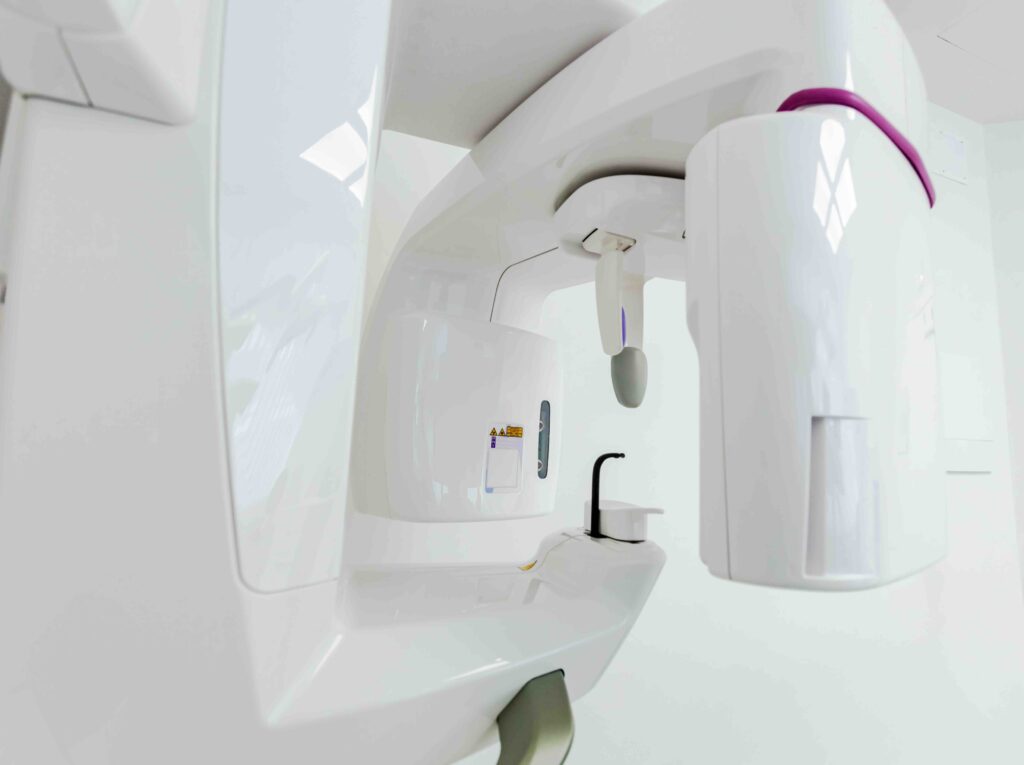
This is where modern imaging has changed implant care for the better. Cone beam CT scans allow clinicians to assess anatomy in three dimensions rather than guessing from two-dimensional films. Surgical guides can improve precision. Digital planning helps align the implant not only with the bone but with the future crown and the patient’s smile line.
In difficult cases, that planning may also involve grafting. Bone grafts, sinus lifts, or soft tissue augmentation are not signs that implants are failing as a concept. They are signs that the clinician is trying to create the conditions that permanence requires.
A common misunderstanding is that a patient is either a candidate for implants or not. In reality, many patients become candidates after preparation. The question is often not whether an implant can be placed, but whether the supporting bone and tissue can be built into a stable foundation first.
The crown is replaceable, the implant is the long game
Another point worth clarifying is that an implant restoration has parts, and those parts do not all age the same way.
The implant body embedded in bone is intended to be the long-term anchor. Above that sits an abutment, which connects the implant to the visible restoration. Then there is the crown, bridge, or denture attached on top. The upper portion is exposed to wear, fracture risk, staining, and bite forces in a way the buried implant is not.
Patients sometimes hear that an implant crown might need replacement after ten or fifteen years and assume that means implants are not permanent. That is the wrong takeaway. A crown wearing out is not the same thing as the implant failing. Natural teeth need maintenance too. Crowns crack, fillings wear, enamel chips, and bite guards need replacement. Longevity in dentistry usually means the foundation remains stable while restorative components are serviced over time.
A useful comparison is a house. Replacing the roof after years of weather does not mean the foundation was temporary. With Dental Implants, the goal is much the same. Preserve the anchor, maintain the supporting structures, and repair the visible components as needed.
Why implants often feel more natural than other options
Permanent is not just about survival. It is also about how a tooth replacement behaves in daily life.
Well-integrated implants tend to feel secure because they do not move when speaking or chewing. Patients who have spent years with a lower denture often notice the difference immediately. They can bite into firmer foods with more confidence. They are less preoccupied with whether the appliance will lift, click, or shift. That psychological relief is real and often underestimated.
The chewing efficiency also improves in many cases, though it is not identical to a natural tooth. Natural teeth are suspended in the jaw by a periodontal ligament, which contains nerve fibers that provide subtle feedback about pressure. Implants do not have that same ligament. They can still function extremely well, but they transmit force differently.
That difference is one reason occlusion, the way the teeth contact, matters so much. An implant can handle normal force very well, but it has less natural shock absorption than a tooth. Patients who clench at night may need a protective night guard, especially if they have multiple implants or porcelain restorations.
Even with that caveat, implants usually come closer to a natural tooth experience than any other replacement. They are fixed, independent, and stable. For most patients, that is what makes them feel permanent.
The limits of the word permanent
No responsible dentist should suggest that implants are guaranteed for life in every person under every condition. Permanent does not mean indestructible. It means designed for long-term integration and use, with the potential for very extended service.
Several factors can shorten that lifespan. Smoking remains a major one because it impairs healing and raises the risk of complications around implants. Poorly controlled diabetes can interfere with healing and immune response. Untreated periodontal disease can affect implant sites just as it affects natural teeth. Chronic dry mouth, heavy grinding, and neglected oral hygiene can all increase the risk of problems.
There is also the issue of peri-implant disease, which is inflammation around an implant. Early inflammation, called peri-implant mucositis, may be reversible if caught and managed. More advanced disease, peri-implantitis, involves bone loss around the implant and can threaten its stability. This is one of the clearest reminders that implants are not maintenance-free.
In practice, the patients who do best with implants are rarely the ones looking for a “set it and forget it” solution. They are the ones who understand that permanence is supported by habits. Regular professional cleanings, home care, monitoring of the bite, and prompt attention to inflammation all contribute to long-term success.
Not every missing tooth should be treated the same way
The permanence of Dental Implants becomes even more meaningful when compared case by case rather than in the abstract.
A single missing molar in an otherwise healthy mouth is often an excellent implant case because the implant can replace that tooth without trimming down adjacent teeth for a bridge. In that scenario, the implant is conservative in a structural sense, even though it involves surgery.
A front tooth is a different challenge. The esthetic demands are higher, the bone is often thinner, and a perfect result depends on tissue contours as much as on integration. These cases can be permanent and beautiful, but they are technique-sensitive. Small errors show.
Full-arch cases bring another set of decisions. Implant-supported dentures and fixed full-arch bridges can transform quality of life for people with failing dentitions or long-term denture problems. Yet they also require realistic expectations about cleaning access, maintenance parts, and future service.
This is where judgment matters more than sales language. A permanent tooth replacement is not just about choosing implants over everything else. It is about deciding when implants are the right choice, how many are needed, and what type of restoration will serve the patient best over years, not just at delivery.
The patient’s role is bigger than many expect
One of the quiet truths in implant dentistry is that the surgeon does not determine longevity alone. The patient becomes a co-author of the result.
Daily cleaning around implants is essential because plaque can accumulate around them just as it does around natural teeth. In fact, implants may require even more attention in some designs because the contours of the crown or bridge can create food traps if cleaning is neglected. Interdental brushes, floss designed for implants, water flossers, and custom hygiene instructions all have a place depending on the case.
Follow-up care matters just as much. I have seen patients keep implants healthy for decades because they never miss recall visits and they respond early when tissue starts to look puffy or bleed. I have also seen expensive implant work break down because people assumed that a non-decaying material did not require the same vigilance as a real tooth.
An implant cannot get a cavity, but the tissues around it can absolutely become diseased. That distinction needs to be clear from the start.
Why the best implant work rarely looks dramatic
The most durable implant cases are often the least flashy. The gum tissue looks calm. The crown shape allows cleaning. The contacts are balanced. The patient can chew comfortably without thinking about the restoration. On an x-ray, the bone level remains stable over time.
That kind of result does not usually come from rushing. It comes from respecting biology, accepting when grafting is necessary, choosing a restoration design that matches the patient’s habits, and refusing shortcuts that create problems later.
There is also humility in good implant care. Sometimes the right move is delaying placement to let a graft mature. Sometimes it is extracting a hopeless adjacent tooth and changing the treatment plan. Sometimes it is deciding that a bridge or removable option is more sensible because the patient’s medical history, finances, or hygiene capacity make an implant a poor long-term bet.
Permanence is not created by insisting on implants in every situation. It is created by matching the treatment to the reality of the mouth.
What patients should take from the word permanent
When dentists describe implants as a permanent tooth replacement, the most accurate interpretation is this: they are the closest modern dentistry comes to replacing the root and visible tooth in a way that can become functionally integrated with the body and remain stable for many years, often decades.
That permanence comes from several things working together. The implant acts as an artificial root. The jawbone bonds to it through osseointegration. The implant helps preserve bone that would otherwise shrink. The restoration is fixed and stable, not removable. With proper planning, good tissue support, and long-term maintenance, the result can be exceptionally durable.
The word should not be heard as a promise that nothing will ever need attention. Crowns can wear, screws can loosen, tissue can inflame, and bite changes can create new stress. But those possibilities do not weaken the core value of implants. They simply place them where all good dentistry belongs, in the realm of realistic long-term care rather than fantasy.
For the right patient, Dental Implants are permanent not because they are invincible, but because they restore what matters most, a stable root-level foundation that the body can accept, use, and preserve. That is what turns a replacement tooth into something much closer to a part of you.
Oaks Dental
5000 Parkway Calabasas Suite 308
Calabasas, CA 91302, United States
+1 818-431-2000
FAQ About Dental Implants
What is the downside of a dental implant?
Implants require surgery and a healing period that can last several months. Possible complications include infection, nerve or sinus injury, damage to nearby teeth and failure to bond with bone. Your dentist should assess your health, bone support and alternatives before recommending treatment.
What do dental implants typically cost?
There is no single price for every implant case. The number of teeth replaced, implant components, final restoration and any grafting or extractions affect the total. Request a written estimate covering every stage and confirm insurance benefits and out-of-pocket costs with the practice.
How long do tooth implants last?
An implant can provide long-term support and may last a lifetime with good oral hygiene and regular dental care, but this is not guaranteed. The crown or other restoration may need replacement sooner. Smoking, gum disease and some health conditions can reduce implant success.